7.7.21

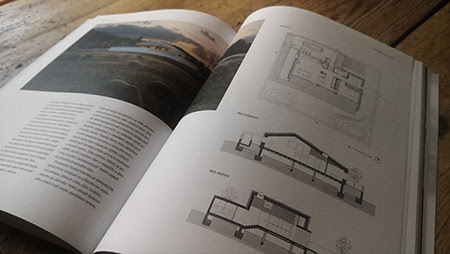
GRX Arquitectos interview by Intro Magazine

GRX Arquitectos kept a short interview by Tereza Svachova for Czech architecture magazine INTRO added to 14th publication dedicated to stone architecture.


Why did you decided to use local raw stone cladding? Why didn't the house simply remain in concrete.

Carlos Gor: A two-sided concrete needs different constructive sophistications that we knew it were a hassle for the local builders and we wanted only simples detail to execute. On the other hand, we didn´t want to generate a "strange object in the landscape" but an architecture that neighbors understood as logic for that place, that could serve as a model to sew the border of the town and that is why we looked for a stone that would be recognized as the old local constructions or the agricultural walls.

Álvaro Gor: The client also welcomed a difference between the "heavier" exterior and a "softer" interior.

What is the specific type of stone you used here?

Agustín Gor:We had the idea of using the stone from the same land as the house, since it is very common for there to be a large amount of stone on the ground and thus transform the land into architecture, but it turned out the land was better than we expected and not had stones. We went to a local quarry and saw that they accumulated a type of white stone that we liked very much: large size but manipulable by one person.

Álvaro Gor: It turned out that this stone was the leftover from generating large stone slabs and it was sold to make gravel, so it was extraordinarily cheap. It is a very common sandstone in the area, very easy to work with and quite light, which allowed workers to handle it despite its large size.


What is the tradition of using stone in architecture in this area?

Carlos Gor: Before the arrival of standardized materials to rural places in Spain in the 60s and 70s, all local construction was done with a mixture of mud and stone, basically transforming the territory into architecture. In the same way, the agricultural retaining walls are made of stone. So if you walk around the environment, any agricultural construction, or any traditional building witch has lost its coating reveals the masonry.

How is the stone cladding technically anchored to the load-bearing structure? In detail, it seems that, for example, only some stones are firmly anchored to the roof structure.

Álvaro Gor: We planned to use a patented system to anchor the stones to the concrete wall because we had planned a smaller stone size and it was necessary to avoid detachment. But during construction we discovered that it was unnecessary, the size of the stone was larger than expected and we liked that because of its brutal appearance and because it stood on its own without problem.

Agustín Gor: On the roof we were also surprised because the stones were perfectly held by friction and weight, no type of anchoring was necessary. Even so, we fixed some of them, but we were very clear in indicating to the workers that the stone should only rest dry because it was essential that the water ran under the stones and there should not be elements that impeded this circulation. Our intention is that, with time, sand will be acumulated in the roof and walls and the house could be covered by vegetation.

How complicated it was to put the different shapes of the individual stones together? Did you have to choose individual pieces for a long lime, or were you lucky and they all fell more or less together?

Álvaro Gor: This question was key in the final appearance of the house. There was quite a variety of sizes and shapes of stones, and the worker in charge began to assemble them "too well", almost like a perfect puzzle placing the flat faces outwards. It was a problem to make him understand that the placement had to be more random, avoiding that flat faces cut by the machine could be seen, with a natural appearance.

Carlos Gor: This was not only for appearance, on the roof the stone density should not be very high cause the weight and for the water to pass well between the stones, which favored that the flat faces served to support the stone. We had to place some stones "wrong" ourselves during some days so that the worker understood it well.


At the photos, the house is captured under a sprinkling of snow. How often does it snow in this area?

Carlos Gor: Although the house is in Andalusia, Puebla de Don Fadrique is a village that is located at a high altitude and next to mountains, so snow is quite common. We always stop by the house to see how different phenomena (a lot of rain or snow) affect the house because of the unusual nature of the technique and we are surprised by how well it works. Coincidentally this year the storm "Filomena" has left up to a meter of snow in the area that can endure for months because it is a cold place in winter. We were amazed at how quickly the snow cleared, faster than on conventional sloped roofs. The gaps between the stones made it easier for the snow to fall apart and prevent it from falling off the eaves, which has been a safety problem in the town.

Agustín Gor: Despite having some experiment in the details of the house, all of them have been done with enough care to make sure that they were not an inconvenience but that they solved problems that the conventional architectures of the area suffer.

10.12.11

WORKMEN'S GARDENS MICROCOSMOS

Subterritorios is pleased to post a Urszula Ramus´s article about Workmen´s Gardens in Warsaw in "Architecture without Architects" section. In Spanish soon.


Workmen´s gardens
By Urszula Ramus

The workmen's gardens are green areas divided into parceles, situated within the cities. In Poland there are about 5000 of them. Nowadays, a discussion takes place on what should be done to deal with those areas.  City authorities try to eliminate them because they find them shabby- especially its small architecture. Moreover, they often occupy valuable land in urban centers- especially in Warsaw.  On the other side, there is workmen's gardens movement, that defend the gardens, as they have leased these lands for decades. To them, it's not just a scrap of land, but also a lifestyle. Whatever the result of these discussion might be, the gardens are quite an interesting phenomenon.
The idea of the workmen's gardens was found in the end of the nineteenth century as a remedy to the English working-class families, that lived in blocks of flats, to prevent them from sinking to crime. This small piece of land, was to provide the workers with some place to rest after work and to substitute the beauty that wasn't available to them throughout the museums, theatres, etc. This idea spread to the other European countries, like Germany, France, Sweden, Austria, Italy, Czech Republic.


Warszawa (1959) by Eustachy Kossakowski
In Poland the first gardens were established in the beginning of the twentieth century. Many of them were located in the city districts to shorten the way from the blocks. During the crisis  the parcels were leased for a very small amount of money to the unemployed, so they could grow some crops. A typical garden consists of parcels that are around 250- 600 square meter big. After the second world war, the communist authorities promoted the idea even more strongly. Each working place that employed more than 200 people, was obliged to establish a workmen's garden. The main aim was to attach the workers to the factory. Nevertheless, the authorities were afraid of giving the workers too much freedom of invention as they were aware that this small architecture could have some bad influence on the aesthetics of the city . That is why the form of using those parcels was defined to the last detail: the location and size of the huts, the materials and colors, the type of the fence and the gateway, and even how the land should be cultivated: the shapes of the flowerbeds and types of plants. The form was to follow the function.


A perfect garden plan
Whereas it's interesting to see, that despite those restrictions, the gardens are not a reflection of the raw socialist aesthetics. Each parcel is different. The individual need of creation is clearly visible here throughout the fancy shapes of the entrance gates that correspond with the arbors, fancy porches, various colors and ornaments. This reflects the longing for the past world with traditional polish manor houses, family gardens and this kind of ambience that cannot be found in the big concrete housing estates. This corresponds with the statement of "the five skins" made by Hundertwasser. He believed, that each person, in order to feel well, should have right to design his home (the 3rd skin).


Speech in the nude for the Right to a Third Skin on the occasion of a Pintorarium action, Galerie Richard P. Hartmann, Munich, (Stefan Moses,1967)
These architects amateurs build with things that are available- mostly recycled materials.  There are many interesting ideas and solutions using old bathtubs, broken home appliance, furniture or even tyres. This patchwork is an under scaled district inside the district. The workmen have here possibility to design, which they normally wouldn't have. Only that the scale of the parcels' interiors are more accurate to the single plant, than to a human scale. It brings back association with something naive or toy like. As in children's play, where all the devices are smaller and imitate some real objects: little chairs, tables, plastic pottery. Also in those gardens the imagination plays the main role. In this way, the workmen’s gardens seem to be playgrounds for the adults. And although naiv, they are one of the temporary icons of our age.


 The alley of women, The alley of tulips


The gates


The activities.

MIKROKOSMOS OGRÓDKÓW DZIAŁKOWYCH

By Urszula Ramus

Ogrody działkowe są zielonymi obszarami wydzielonymi w obrębie miast. W Polsce jest ich aktualnie ok 5000. Obecnie toczy się spora dyskusja, co z nimi zrobić. Władze miast próbują je likwidować, ponieważ często zajmują cenne tereny w centrach miast- szczególnie w Warszawie, Przeciwne są temu związki działkowców, którzy przez dziesięciolecia i pokolenia zdążyli się do nich przyzwyczaić. Dla tych ludzi, ogródki działkowe nie są tylko kawałkiem poletka uprawnego- są stylem życia. Trudno zająć jednoznaczne stanowisko w tej dyskusji. Jakikolwiek byłby jej wynik, jest to dosyć ciekawe zjawisko, któremu warto przyjrzeć się bliżej.
Idea ogrodów działkowych powstała pod koniec  XIX wieku jako remedium dla staczających się angielskich rodzin robotniczych mieszkających w budynkach wielorodzinnych. Dzierżawiony skrawek ziemi miał być namiastką tradycyjnego ogrodu przydomowego, miejscem odpoczynku po pracy, namiastką piękna dla każdej osoby, której nie dostępne były muzea, teatry itp.  Ogródki działkowe zaczęły powstawać w wielu krajach Europy: zwłaszcza w Niemczech i Francji, ale także w Szwecji, Austrii,Belgii, Czechach, Słowacji, we Włoszech i Szwajcarii.

W Polsce pierwsze ogódki działkowe zaczęły powstawać na początku XX wieku. Najpierw głównie w celach wypoczynkowych, w czasie kryzysu- jako środek łagodzący skutki bezrobocia.  Powstało prawo, na mocy którego uchwalono przekazywać bezrobotnym (lub dzierżawić za min. opłatą) działki , pod uprawę płodów rolnych pierwszej potrzeby. Ogrody zakładano w obrębie miast , co oszczędzało czas na dojazd. Typowy ogród składał się z wydzielonych parcel wielkości 250-600 m2, na których można było budować altany. W jego centrum znajdowało się boisko i miejsce zebrań- latem dzieci spędzały tam półkolonie letnie.
Po wojnie, władze komunistyczne jeszcze silniej propagowały ideę zakładania ogródków działkowych. Odtąd każdy zakład pracy powyżej 200 osób miał obowiązek zakładania ogrodu działkowego. Władzom chodziło w dużej mierze o związanie ludzi z zakładem pracy. Jednocześnie, zaczęto zdawać sobie sprawę, że działki nie są zbyt estetycznym elementem miast. Toteż wydawano ścisłe wytyczne, co do kształtowania działek. Określano wielkość i usytuowanie altany, rodzaj ogrodzenia, furtki, ujęcia wody,a nawet sposóbu, w jaki powinno się uprawiać działkę.   Forma ogódków wynikała z utylitarnej funkcji. 

Tymczasem spacerując pomiędzy ogódkami można dostrzec, że pomimo tych ograniczeń i narzuconego schematu, ogrody nie są odzwierciedleniem surowej estetyki socjalistycznej. Każda działka jest inna i w każdej widać indywidualną potrzebę kreowania świata. Ciekawe są fantazyjne  kształty bramek wejściowych, detale altan, w wariacjach kolorów, mnogości ornamentów ganków. To odzwierciedla tęsknotę za czymś minionym, tradycją polskich dworków z przydomowymi ogrodami. Za atmosferą domu, której próżno szukać w blokowiskach.  Architekt  F. Hundertwasser w swoim manifeście "Pięć skór" dowodził, że każdy człowiek, aby czuć się dobrze w swoim domu (trzeciej skórze), powienien mieć prawo do jego kreowania.

Działkowi architekci amatorzy budują swoje altany z tego, co jest "pod ręką". Najczęściej są to materiały z odzysku. Na działkach można trafić na wiele ciekawych rozwiązań, prowizorycznych, ale jednak zmyślnych, z wykorzystaniem starych wanien, zapsutych urządzeń domowych, mebli czy nawet opon. Ta zamknięta mozaika ogródków stanowi mini dzielnicę w dzielnicy, w któej działkowcy mają pole do popisu dla swojej zmyślności.  Biorąc pod uwagę skalę- jest to dosyć dziwna przestrzeń. Wnetrza ogrodów nie są w skali człowieka, lecz raczej w skali rośliny. Kojarzy się to z czymś "na niby" - jak w dzieciństwie, kiedy bawiliśmy się w dom, sklepik, itp.  korzystając ze sprzętów dostosowanych do naszej skali i imitujących prawdziwe: małych kuchenek, krzesełek,stoliczków. Także w tych ogródkach główną rolę odgrywa wyobraźnia. W tym sensie ogródki działkowe możnaby nazwać placem zabaw dla dorosłych. Chociaż naiwne i może tymczasowe, są pewnym znakiem naszych czasów.


Bibliography:
"Workmen's garden in Poland", Marja Chmieleńska
"Ogrody działkowe", Zofja Drwęska- Doeringowa
"Historia i struktura ogrodu rodzinnego", Beata J. Gawryszewska
"Organizowanie i zakładanie pracowniczych ogrodów działkowych", Tadeusz Kulicki

15.7.11

Otomo´s Pre-Cyberpunk

In the section “Architecture without Architects”, I would like to file some information regarding the urban visions of Katsuhiro Otomo. The first of his many attractive urban stories is “Nightmares”(Dômu, 1983), first published in Spain by Norma Editorial in 1991. In this comic, Otomo begins developing stifling urban contexts which are the first graphic reference to cyberpunk (although “Nightmares” should not be understood as cyberpunk work)and culminates later with the Neo Tokyo of "Akira" between 1982 and 1990.

“Nightmares” raises big expectations after the first three pages that drop later as the story takes place. This is because of the suggestive story given at the beginning. Bizarre incidents are occurring in a social housing district of Tokyo, where bodies of people that seem to have jumped from the disturbing building mass have appeared, as if a supernatural force was giving a suffocating and hypnotic character to the architecture that was making these habitants jump to commit suicide.

This quality is influenced by an era of expansion and urban growth in Japan at the end of the 70’s, as Alfons Moliné transcribes from an interview with Otomo in the journal Yomiuri Shimbun: “When I was living in that area they carried out a new project of public housing. Soon, they got occupied by couples with low salaries and newborn babies.It looked like they would never adapt to this sort of congested urban life, but they ended up trapped in this world”. However, after this promising beginning that also inspired not only cyberpunk, but the so many times imitated Japanese horror cinema in examples like Dark Water (Honogurai Mizuno Sokokara, by Hideo Nakata, 2002), the story  becomes a battle between caricature beings with strange revenges and supernatural forces that actually leave much to be desired. I believe that this characteristic intends to find an anthropomorphic representation of terror and the effects caused by these urban environments, but the literal transcription of ghost characters generates a loss of the “onirism” with which “Nightmares” enraptures us at the beginning.


Public Housing in Tokyo
But the effectiveness of his architectural representations on the plot lays the foundations of Otomo’s urban importance. All the critics praise this characteristic and the expressive strength of his sketches but I haven’t found any insightful analysis regarding the opportunism produced by the environments of his vignettes: What’s the reason for this enormous effort in the representation of these environments so carefully in Otomo’s work? Why don’t they turn out to be stressful at any time? Furthermore, why do they become necessary?


Nightmares (Dômu, 1983), Katsuhiro Otomo
I recently found the answer in Slavoj Zizek, in his book Lacrimen Rerum (Debate, 2005). In this work, Zizek uses the concept, extracted from ideas of Lacan, from “Gran Otro”, like a ghost that some others call “The System” or “Above”. But this concept from “Big Other” makes more sense in this example, “Big Other” is not necessarily a tyrannical superstructure that pulls the strings of the social dynamics, but he is an external agent, the “remains of”, an amalgam, the whole swarm that makes things to be the way they are. It exercises power over the individual, from which all the political and subjective agents of a society take part in an almost schizoid way. All of them except the “I” that resists, from Foucault’s perspective, or flows, if it is Deleuze looking at it.
Although it is not time to deepen into this principle, the beginning of “Nightmares” makes you think that it is this concept, that consciously or unconsciously occurs in the urban sketches of Otomo, the representation and presence of “Big Other” in the course of the story and its influence over the characters, and somehow this “Big Other” is the one that Otomo tries to materialise in his narrative change, from the suffocating architectures towards the anthropomorphic ghost characters.


Nightmares (Dômu, 1983), Katsuhiro Otomo


Nightmares (Dômu, 1983), Katsuhiro Otomo
Text by Subterritorios

Original text HERE

Translation by Guillermina Lozano


30.6.11

Funfair Architectures


Let’s continue with some other visual sections such as “Wonder World”. In this case, with nice and fresh pictures from the Corpus Christi funfair in Granada. 


If a factory is a ruin of the contemporary productive scenery, inherited from the industrial era, funfair attractions are an analogical ruin of leisure in the digital era. But do not get me wrong, when I say ruin I mean it from the cultural heritage point of view and from an absolute claim of their use and validity, never understanding them as a dead device. I think that in the future, amusement parks (and fairs as a nomad sub-product), together with shopping malls, will be regarded as one of the few space inventions of the 20th Century. I find incredible how it all moves, gets dismantled and transported every week while we are not even able to generate a flexible city.

Text by Subterritorios
Translation by Guillermina Lozano

Original Text HERE

29.6.11

Dissected Landscapes

Within the section "Architecture Without Architects", and thanks to Geoff Manugh’s blog, we get to know Alan’s Wolfson’s work, a US artist who creates miniature mock-ups recreating real New York sceneries.
"Canal Station Cross Section" by Alan Wolfson.


I am interested in his work for many reasons: in one hand, he generates dissections of real landscapes giving them a cumulative character.  This way, he crystallises situations already fluctuating, revealing the globality of landscapes that were usually were perceived partially. Somehow it reminds me of those photographic landscapes in Blade Runner that were able to spin and penetrate in spaces as if the capture was in three dimensions. Roughly, Wolfson’s work is 3D photography that creates devices to be observed from three different points of view. 

"Canal Station Cross Section" by Alan Wolfson.

Secondly, as a process, his work leads to a further reflexion regarding the complexity that entails the semiotic of a landscape and at the same time, it re-evaluates a contemporary landscape’s patrimony. Wolfson’s work emerges from his admiration of the commercial landscape, US’s landscape patrimony.
One element of such patrimony is the “diner”, tho which Wolfson dedicates part of his work. These diners are well introduced in the contemporary cinematographic subconscious and on top of that, they are a fading landscape. 


"Lor-Al Diner" by Alan Wolfson.

Knowing that diners are endangered landscapes, I never thought that during my first trip to New York I would bump into one of them. Just in front of Storefront of Architecture, 114 Kenmare Str., I came across "The Corner Deli" where they served incredible burritos. The story does not end up here, one month later, while re-watching Jim Jarmusch’s movie “"Una Noche en Tierra" , 1991 (hugs, Jim Jarmusch), I happened to watch a diner on a scene called The Corner Deli. I immediately paused the movie, zoomed the screen and there it was, Kenmare Str. could be read from the corner sign. I did not only find a wonderful space but I had just done a genealogy of it.
Top, "The Corner Deli" in present-day NY, botton, "Night on Earth" of Jim Jarmusch, in the dirty NY of 1991.


Text by Subterritorios.
Original post here. 


Translation by Guillermina Lozano

27.6.11

Why are we here?

It took several weeks until I got the chance to watch this movie I have been hoping to see for a long time: Inside Job, directed by Charles H. Ferguson. An in-depth study seems appropriate for who wishes to understand the purpose of the section "Architecture Without Architects", a broader idea of architecture and territory, that goes beyond such discipline and besides, it won’t leave you indifferent.


Top, empty evicted houses. Bottom “Tent City” a camp for people who were evicted from their homes, Florida.

Regardless of its documentary value, this film deserves to be studied as a film of great cinematographic quality. As in the trilogy Qatsi, it achieves a poetic that even though it is obvious, it does not stop being subtle or boastful, like for example, in a Michael Moore documentary (hugs, Michael Moore). The movie captures the impact of both the economic bubble and the Global Financial Crisis on the landscape. It is not easy but the movie ends up doing it very effectively. Besides, through those symbolic landscapes, it manages to express that level of information that would have never been achieved with an article or a direct and detailed essay. In this narrative strategy, the script is well structured, an exemplary exercise. At times filmmakers, within the same movie, tell a micro-story that entails all the poetic symbolism contained in the main story in order to find a better understanding of the narration, allowing the audience to enjoy the plot withdrawing attention from information. This also happens in Inside Job with the micro example of Iceland, when he explains his particular “way of the cross” and then explains a more complex global process with one of its major epicentres in the United States. His way of explaining the case, the visual accompaniment of the landscapes, its exploitation and the impact generated by the crisis, is the gateway to the case in North America, executed with extraordinarily beauty, if you can say so.

It is obvious that it makes no sense to talk about this movie from a poetic or visual point of view, as this strategy is oriented to make its content more understandable and realistic (we will speak about the aesthetics of veracity some other day).
The truth is that talking about a complex matter such as the circumstances that generated the global financial crisis, is the reason why I believe that the analysis and repercussions of this film were paused: the delicate and complex matters that this movie covers, not really knowing how to assume them as well as the indignation that they bring along.
But there are some significant questions on a narrative level that deserved to be told and remain totally clear in Inside Job.


Provoked Crisis: We all suspected the bubble was going to explode, it was not normal… But how is this bubble created? Is it as simple as getting a loan or building as much as you can? In this movie we get to know not only how it was created, which is understandable, but also to discover (not suspect but clearly discover) the interests that generate a crisis of these characteristics. Yes, interest in generating a crisis, like the regularisation created after the recession of the Great Crash in 1929, dismantled in the 80’s that generated the foundations of what has been happening since the 90’s. Such deregulation was strongly defended (this means aggressively) by those who generated the madness of finance investors and mortgage insurer providers, not because they believed in deregulation or liberalism but because they used it to swindle an entire society. Simply, to the question of how investors can be interested in generating a crisis, the answer is very clear: investing in the ruin of society.
Investing counter-clockwise: This is one of the strongest arguments of the movie, the expressive and diagrammatical capacity manifested in the landscape, and the schemes with architectural symbolism that explain enough complex operations for the masterminds of the frauds not to be punished from any action.
How do you lie to a system? The so-called deregulation allowed mortgages (not only small mortgage owners but the big investments of local governments or even entire nations) to move from mortgage lenders to large financial institutions that insured such investment operations. This is the main question of the global fraud: while those investors paid the insurance (the same way you pay for your motorbike insurance), the deregulation allowed speculators to invest in those insurances (that is, 5 more people paying for your insurance), and the insurers received big bonuses for this massive selling. It is clear now that this kind of procedure was extremely risky, as clearly if the mortgage for which no one took responsibility was unpaid, the insurer had to pay the money invested in it to those who invested in the potential non-payment of the mortgage.
This is what led AIG, one of the largest insurers of the world, to the ruin and later forced those who created it (like Henry Paulson, Ben Bernecke and Tim Geithner) to conduct the most expensive economic rescue in History by means of the Federal Reserve. But those responsible would not care anymore as they would have earned their bonuses and had got their shares. On top of that, to ensure everything would run smoothly, they would recommend the subprime mortgage investments as a safe value, knowing that the majority would not be payed, so they could invest counter-clockwise. They basically made a Chihuahua race against a Greyhound to close a safe bet for the Greyhound.

Henry Paulson, Ben Bernake and Tim Geithner, three sassy ones.

How come this was legal? : This is the most quixotic bit, those who took part in this meanness fraud were not nihilist yuppies but people holding important positions and US political advisers since the Reagan era, who consolidated the deregulation.
Names like Alan Greenspan (Chairman of the Federal Reserve and adviser to all the US Governments since Bush Senior), Ben Bernanke (Chairman of the Federal Reserve and adviser to Bush Junior), Henry Paulson (adviser and U.S. Secretary of the Treasury) and others, created favourable reports for the insurers and CDO’s, convinced investors, opposed to the regularisation and became multimillionaire with this operation knowing everything would eventually collapse.

Top, Robert Gnaizda, bottom,  Nouriel Roubini, some of the experts who warned the Government and the Federal Reserve in different ways (Geek note: As in the case of Roubini, some of the experts were interviewed at the terrace of SANAA’s New Museum, to give a sensation of an elegant cleared office.)
We all suspected that the bubble would explode and almost all of us thought that it was inevitable and a consequence of capitalism, but it is not true that we did not know how, or that there would not be any chance to avoid it. There were important specialists who spent years trying to achieve the regularisation or declare certain practices illegal. We are not talking about anti capitalism activists but influential people who were heard by the financial elites, like Reghuram Rajan (Chief Economist of the International Monetary Found) or Robert Gnaizda (Director for the Greenlining Institute) who met all the heads of the Federal Reserve during Clinton and Bush era (that is almost 16 years) warning of all the matters that made the system burst. Even within AIG, Joseph St. Denis, an internal auditor, gave up his bonus and was expelled for denouncing the practices of the company.

Pictures of Inside Job, reflection of
the avarice and excess of investors and speculators.

Evil Teaching: One of the elements to be grateful for in this documentary is the analysis of the subtly introduced cannibal speculative concepts in the economic culture. Ferguson explains how experts and heads of the most renowned US universities worked as advisors for different government departments and parallel they worked for the finance institutions that led to the fraud, with the aggravation of using their educational structures and their articles to influence the investment culture and in the other hand, to invest in the collapse of the economy. More surprising is to discover that the plot, the details and the nuances are so complex, that no one is aware of being part of the scam.  Currently almost all the perpetrators remain within Obama’s administration. This factor makes them believe that no one else knows the extent of their responsibility although they eventually get caught off guard: the filmmaker knows about it. This defines some of the best moments of the film, awkward silences after awkward questions, refusals to be interviewed, professors gulping, university executives and governmental authorities thinking that their impunity is related to a further understanding of the situation.

Glenn Hubbard, chairman of the Council of Economic Advisors under President George W. Bush and professor of economics and finance at Columbia, who used his academic influence in his own benefit, like Martin Feldstein (Harvard). He is a perennial contender for the Nobel Economics Prize.
Hyper realist horror movie: On many social fields we have been adventurous with the repercussions of the crisis. We have heard that things like “they should pay off” or “is this going to blow? Let it blow!”, are expressions willing to bring the change or the hope that the generation of a systemic crisis will allow the creation of new social and economic models. This is the question that makes critics to ironically define the Inside Job as a horror movie, the clairvoyant idea that the movie transmits that in any case we are facing a systematic crisis nor the situation will bring changes in the global economy. Neither the lobbies or the economic elites are disrupted, the system has improved and unlike the Crash of 29, there are no investors jumping out of their window offices in Manhattan but an increasingly impoverished society as a result of every crisis. The system tests its limits and ensures even better the survival of its elites.  I was reading Rem Koolhaas (hugs, Rem Koolhass) giving his views on China saving the capitalist society. This documentary proves he is right as the high degree of regularisation in china has allowed the US financial elites to have drawn overboard their society without risking the production systems, knowing they remain protected by the Asian epicentre.


Text by Subterritorios.
Original post here. 


Translation by Guillermina Lozano